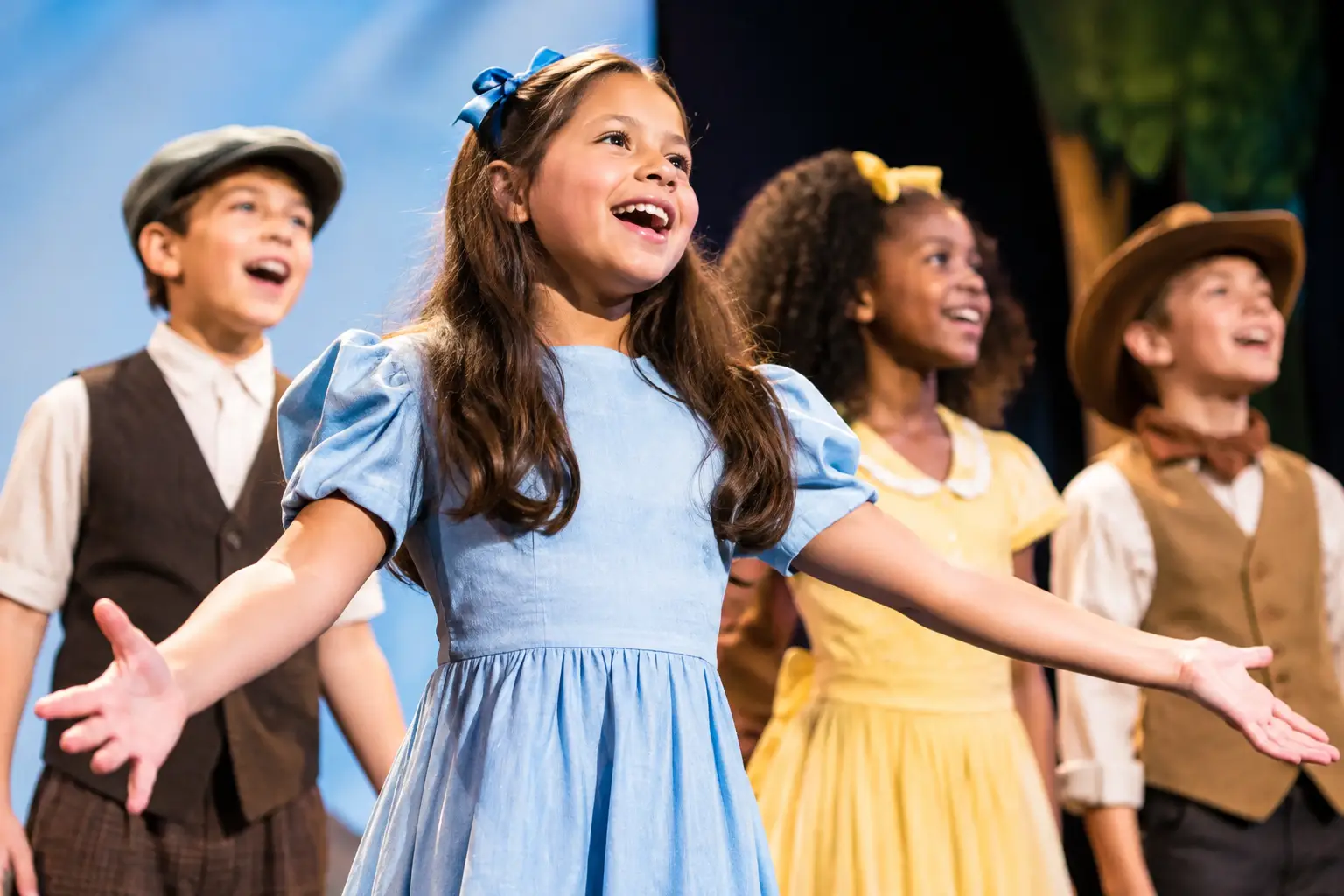
A child who barely raises their hand at school steps into a rehearsal room, receives a character with real lines, and hears a director say, “We need your ideas.” A few weeks later, that same child is practicing their entrance in the kitchen and reminding their family which night the show opens. This child confidence theatre example is not about turning every young person into the loudest performer in the room. It is about giving them a real reason to believe their voice, effort, and presence matter.
For many families, confidence is the hope behind the first audition. Parents may see a child who loves to sing but hesitates around new people, or a teen who has plenty to say at home but worries about being judged. Theatre can create a supportive place to practice courage in small, meaningful steps.
A Child Confidence Theatre Example in Action
Imagine an 8-year-old named Maya arriving at auditions. She has never performed before. She knows one song from a movie soundtrack, holds tightly to her parent’s hand, and speaks so quietly that the creative team has to lean in to hear her. She is excited, but she is also unsure whether she belongs there.
Maya is cast in a role designed for her. It has a name, lines, a moment in a song, and a clear purpose in the story. Her role is not a place to stand in the background until the final bow. The director helps her learn one line at a time, explains why her character says it, and celebrates the day she speaks loudly enough for the back row to hear.
During the first few rehearsals, Maya may still need encouragement. That is normal. Confidence rarely arrives all at once. She watches older cast members model how to take direction, waits her turn, and learns that forgetting a line is not a disaster. It is simply something the group helps fix.
By performance week, she knows where to stand, when to enter, and how her moment fits into the larger story. When the audience laughs at her character’s funny line or applauds after a song, she has evidence that she can do difficult things. The applause is exciting, but the deeper change began long before opening night: someone made room for her, taught her, and trusted her with meaningful work.
Why a Meaningful Role Makes a Difference
Children build confidence when their participation feels genuine. A costume alone can be fun, but responsibility creates a different kind of pride. Learning a line, remembering a cue, supporting a scene partner, or contributing an idea in rehearsal tells a child, “The team counts on me.”
That is why inclusive casting matters so much in youth theatre. At New Star Children’s Theatre, every child who auditions is accepted and receives a meaningful role with lines. There are no chorus-only placements. This approach does not lower expectations. It gives every performer a place to meet expectations, grow skills, and experience the satisfaction of contributing to a full production.
For a beginning performer, a tailored role can prevent the discouragement that comes from feeling invisible. For a more experienced performer, it can offer a fresh challenge that develops leadership, emotional range, or stronger vocal and acting choices. Children do not all need the same size role to grow. They need a role that gives them a reachable next step.
Confidence Is More Than Being Outgoing
A confident child is not always the child who talks first, sings biggest, or takes center stage without nerves. Sometimes confidence looks like walking into rehearsal without a parent. Sometimes it is trying a new facial expression, asking a question, or recovering after a missed cue. For teens, it may look like encouraging a younger cast member or offering a thoughtful idea during scene work.
This distinction is helpful for parents because progress can be easy to miss if the only measure is volume. A shy child may still feel nervous before every performance and become more confident at the same time. Courage is often visible in the choices they make despite those nerves.
Theatre also gives children a vocabulary for emotions. When they explore a character’s excitement, worry, jealousy, or joy, they practice recognizing those feelings in a safe setting. They learn that a strong scene partner listens, responds, and shares the moment. Those lessons can carry into classrooms, friendships, team activities, and family conversations.
What Happens Between Audition and Applause
The final performance is memorable, but the regular rhythm of rehearsal is where much of the growth happens. Children learn to arrive prepared, listen when others are speaking, accept feedback, and try again. They discover that a polished show is created through many imperfect practices.
This process comes with trade-offs. Theatre asks families to make room for rehearsal commitments, line practice, costume needs, and show weekends. A child may feel tired after a long rehearsal, especially during tech week. They may also be disappointed if a scene changes or a favorite moment gets adjusted for the good of the production.
Those experiences can still be positive when the program is development-focused and communication is clear. Children learn that being part of a team means adapting, showing up, and helping the whole story succeed. A supportive theatre environment should challenge performers without making them feel ashamed for learning.
Creative teams play a major role here. Specific encouragement works better than vague praise. “You stayed focused while you waited for your cue” tells a child what they did well. “Try turning toward your scene partner so we can see your expression” gives them a practical next step. When young performers receive clear direction with kindness, correction becomes part of learning rather than something to fear.
How Families Can Support Theatre Confidence at Home
Parents do not need a theatre background to be an excellent support system. The most helpful approach is to stay curious about the process rather than putting all the attention on opening night. Ask what the child enjoyed in rehearsal, what they are working on, or what their character wants in a scene.
If they want help practicing, let them lead. Read the other lines, play a song track, or offer to be the audience for one short scene. If they do not want to rehearse with you, respect that too. Some children need a quiet space to practice before they are ready to share.
Try to praise effort with as much energy as the final result. Notice their preparation, their patience, and their willingness to keep going after a mistake. Avoid comparing their role, costume, or amount of stage time with another child’s. Every production needs many kinds of performers, and comparison can quickly take the joy out of a valuable experience.
It also helps to keep performance-day expectations simple. Nerves are common, even for children who have performed before. A calm ride to the theater, a familiar snack, and reassurance that you are proud of their effort can do more than a last-minute lecture about getting every line perfect.
Choosing a Theatre Program That Helps Children Grow
The right program depends on your child’s age, interests, schedule, and readiness. A child who is eager to perform may enjoy a full-scale musical with a longer rehearsal process. Another may feel more comfortable starting with a day camp production, where the timeline is shorter and the experience is contained within a school break.
As you consider options, look beyond the show title. Ask how casting works, whether beginners are welcome, what kind of role each child can expect, and how directors handle mistakes. Find out how rehearsal schedules are communicated and whether families understand the time commitment before joining. A program can be both joyful and well-organized, and families deserve both.
Most of all, listen to how your child feels after a rehearsal or performance. Are they excited to return? Do they feel known by the adults leading them? Do they talk about fellow cast members with warmth? A little nervousness is expected, but a child should feel safe enough to learn, take risks, and be themselves.
The moment a young performer takes a bow is wonderful, but it is not the only victory. The real win may happen earlier, when they raise their hand, speak up in a scene, help a friend find a prop, or walk through the theatre doors believing there is a place for them. Give children opportunities to be seen, heard, and trusted, and they may carry that feeling far beyond the stage.