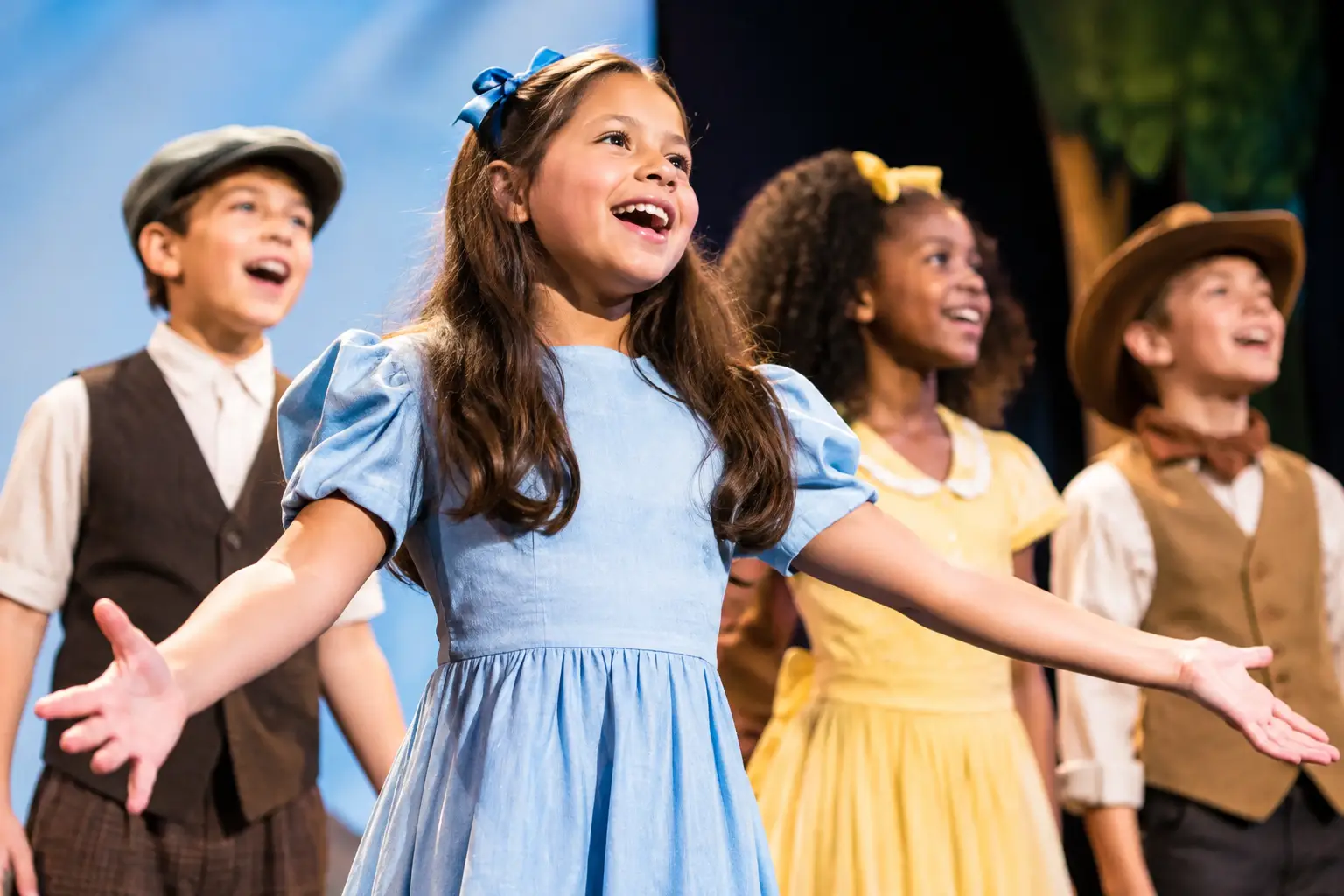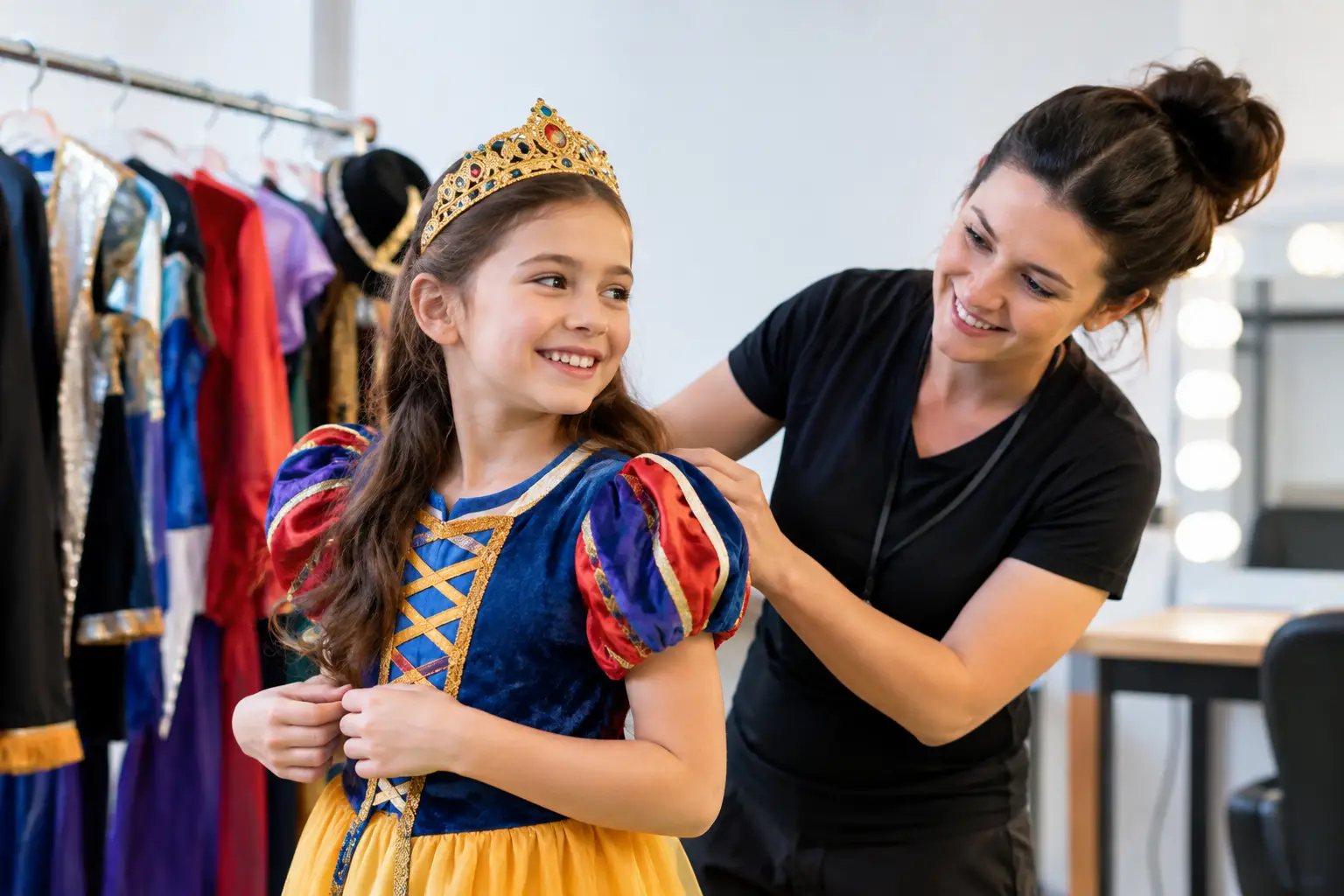
The question “are theatre costumes provided?” is often one of the first practical questions families ask after a child is cast. It makes sense. Costumes help turn rehearsal-room imagination into a full production, and parents want to know what to plan, purchase, borrow, or bring from home. The reassuring answer is that youth theatre costume plans are usually designed with families in mind – and clear communication makes the process manageable.
Are Theatre Costumes Provided in Youth Productions?
It depends on the production and the role, but many youth theatre programs provide the main costume pieces that create the show’s specific look. This may include character outfits, themed accessories, specialty hats, capes, period pieces, uniforms, or items that need to match across a group.
Families are often asked to supply a few simple foundation pieces from home. Common requests include black dance shoes, a plain shirt, leggings, shorts, socks, a camisole, or a neutral layer to wear under a costume. These basics help costumes fit comfortably, stay clean, and allow performers to move safely during quick changes.
At New Star Children’s Theatre, the goal is never to make a child’s ability to participate depend on having an expensive wardrobe. Every young performer deserves the chance to step into character, feel prepared, and shine in a role made for them. If a requested item creates a hardship, families should communicate early with the production team. Youth theatre works best when adults collaborate to make sure every child is ready for the stage.
Why Costume Plans Are Different for Every Show
A musical set in a fairy-tale kingdom needs a different approach than a contemporary comedy, a historical story, or a day camp production. Some shows call for highly specific costumes that are built, collected, altered, or coordinated by the theatre. Others use a simpler costume design that begins with clothes families already have and adds a few theatrical pieces.
The size of the cast matters, too. A production with many characters may use shared costume elements to create a unified world, while a smaller cast may have more individualized looks. A role involving dance, acrobatics, a fast entrance, or multiple scenes may also require special planning for movement and quick changes.
That variation is why it is better not to buy anything before receiving costume instructions. A blue dress, brown boots, or white shirt may sound straightforward, but the director or costume coordinator may need a particular shade, style, or fit for the visual story of the show. Waiting for the official request saves families money and avoids last-minute swaps.
What Families May Be Asked to Provide
When a program asks families to bring something from home, the request is usually for practical basics rather than a complete character costume. These are items a child can comfortably wear, move in, and return home with after each performance.
A performer may be asked to provide the right underlayers, such as a fitted tank, bike shorts, tights, or a nude or black base layer. These pieces are especially useful under costumes that are shared, require quick changes, or need extra coverage during active choreography. Dance shoes or closed-toe shoes may also be requested, depending on the performance space and the character.
Hair and makeup instructions can fall into this category as well. A show may ask for neatly secured hair, a simple hairstyle, or age-appropriate stage makeup. Families should always follow the production’s guidance rather than guessing. Stage lights can wash out faces, but youth theatre makeup should support expression, not make children feel unlike themselves.
If you need to buy an item, look for something that can be used again for dance class, school performances, future productions, or everyday wear. Comfort and mobility matter more than finding a perfect item at the first store you visit.
How Costume Communication Should Work
A thoughtful costume process starts with clear details. Families should receive information about what the theatre will provide, what performers need to bring, when items are due, how costumes should be labeled, and whether any pieces need to be returned after the show.
Read costume emails and handouts carefully, even if your child feels certain they remember every detail. Rehearsal schedules are busy, and costume needs can change as scenes take shape. Keep requested items together in a labeled bag until they are needed. For shared spaces and busy backstage areas, labeling shoes, coats, water bottles, and personal costume pieces is one of the simplest ways to prevent mix-ups.
It also helps to ask questions early. If your child is sensitive to a fabric, has a sizing concern, needs adaptive support, wears glasses, has a medical device, or feels anxious about changing backstage, tell the costume or production team privately. These conversations allow adults to find respectful solutions before dress rehearsal. A costume should help a child perform with confidence, not become a barrier to participation.
Dress Rehearsal Is the Best Costume Test
The first time a performer wears their full costume should not be opening night. Dress rehearsals give the whole company time to check how costumes look under lights and how they function during the actual show.
A costume may fit well while standing still but feel different during a dance number. Sleeves may catch, a hat may slip, a shoe may need a different tie, or a prop may need a safer place to sit between scenes. These are normal discoveries, not signs that anyone has done something wrong. The purpose of dress rehearsal is to solve small problems while there is still time.
Parents can support the process by making sure their child arrives with every requested item, wears the correct underlayers, and has long hair secured as directed. Encourage your performer to speak up politely if something pinches, scratches, feels too loose, or makes it difficult to move. Theatre teaches children that being responsible includes communicating what they need.
Costumes Are Part of the Learning Experience
Costumes are exciting because they help children see themselves as the character they have been creating through rehearsal. A jacket can change posture. A crown can inspire confidence. A funny hat can help a young actor discover a new walk, voice, or sense of timing.
But the most meaningful part is not the fabric itself. It is the moment a child realizes they belong in the story. For beginners, putting on a costume may be the first time performing feels real. For experienced young performers, costume work offers another chance to practice professionalism, care for shared materials, manage quick changes, and support fellow cast members backstage.
That is also why a welcoming theatre culture matters. No child should feel less important because their costume is simple, borrowed, altered, or assembled from basic pieces. Great productions are built through teamwork. Each performer’s preparation, presence, and growing confidence help create the magic the audience sees.
A Simple Way to Prepare at Home
Once costume instructions arrive, set aside a few minutes to try on every requested personal item together. Have your child move, sit, raise their arms, and take a few dance steps. Check that shoes are comfortable and that labels are easy to read. If anything is missing or no longer fits, contact the production team promptly rather than waiting until the next rehearsal.
Then let your child enjoy the anticipation. Costumes are one more sign that the performance is getting close. Whether they are wearing a costume provided by the theatre or bringing a simple piece from home, they are preparing to share their hard work with an audience – and that is a moment worth celebrating.