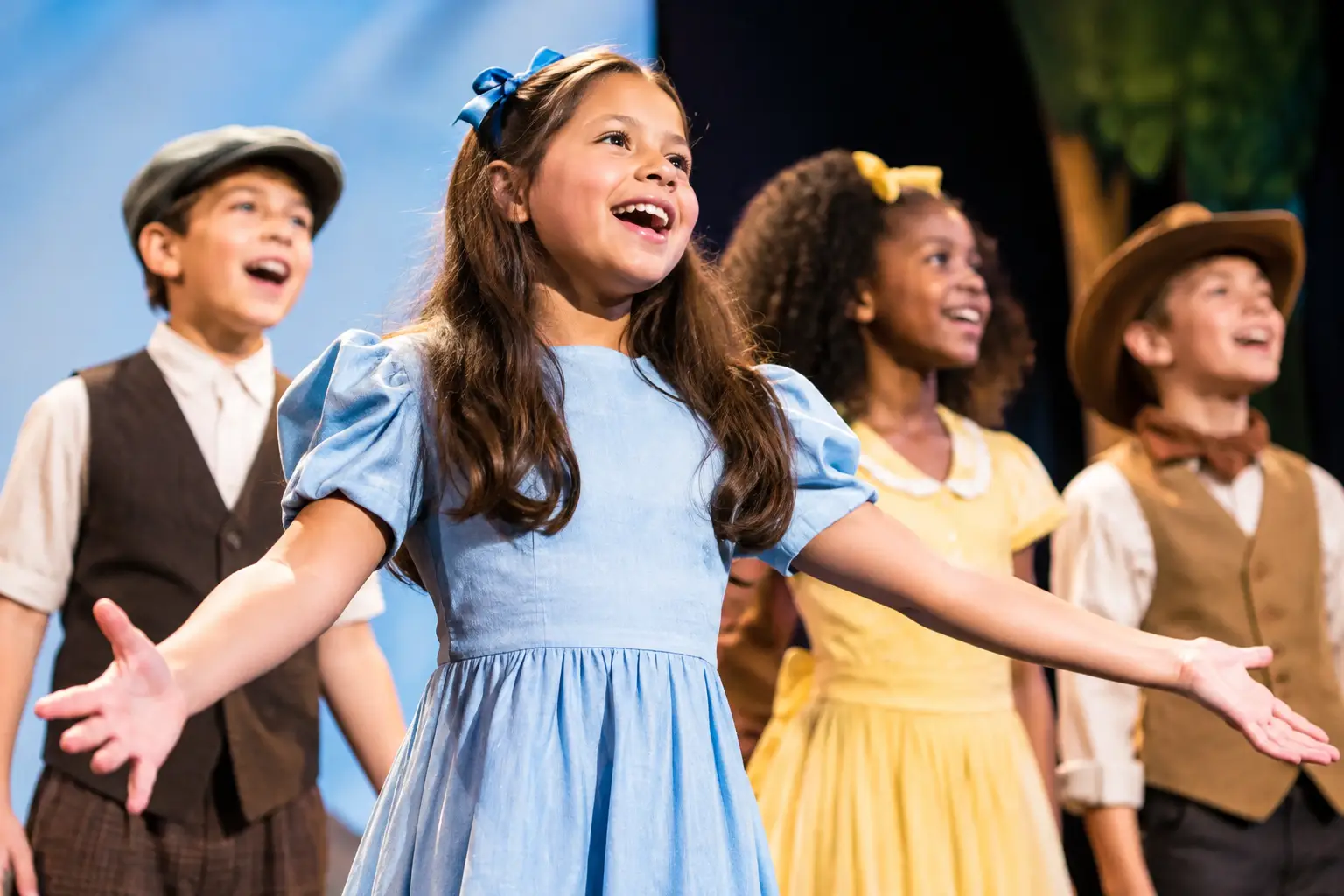
The moment a child steps into a rehearsal room, they are doing more than preparing for a show. They are learning how to listen, take a chance, try again, and let their voice be heard. Kids stage acting can be a joyful path into creativity, but for many families, its greatest value is what happens beyond the spotlight: a child begins to see that they have something meaningful to contribute.
For a first-time performer, that contribution may be one funny line, a carefully practiced entrance, or the courage to sing with a group. For a teen with years of experience, it may be helping a younger castmate feel welcome. Every role offers a chance to grow when a program treats young people as individuals, not as background scenery.
Why Kids Stage Acting Matters Beyond the Show
Theatre asks children to practice skills that matter in school, friendships, and everyday life. A young actor has to remember where to stand, respond when another person speaks, communicate clearly, and keep going if a line comes out differently than planned. Those are real-life skills, learned in a setting full of imagination and applause.
Confidence is often the first change families notice. It does not always look like a child becoming the loudest person in the room. Sometimes confidence means volunteering to read aloud in class, introducing themselves to someone new, or being willing to make a mistake without shutting down. Onstage, children learn that nerves are normal. They also learn that they can move through those nerves with preparation, support, and a team beside them.
Theatre also creates a special kind of belonging. A production only works when every person does their part. The child with a big solo, the performer with one memorable scene, the backstage helper, and the friend who keeps the group laughing during a long rehearsal all matter. When children feel seen for their effort and personality, they are more likely to take creative risks.
What Young Performers Learn in Rehearsal
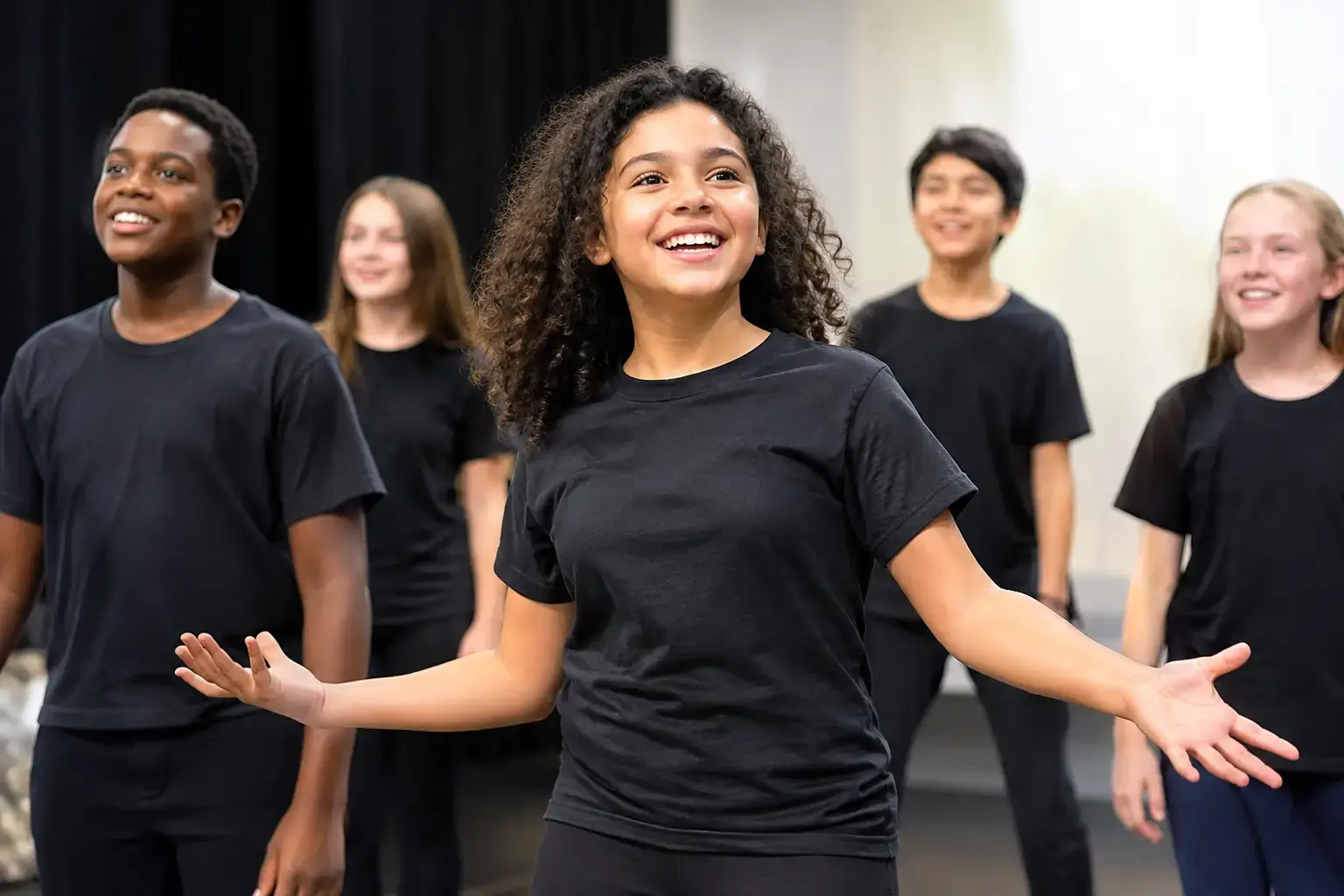
A polished performance can make acting look effortless. Families know better. The real learning happens during the weeks of rehearsals, when children return to a scene, adjust a choice, practice a dance step, and discover that progress comes one small piece at a time.
Listening Is an Acting Skill
Acting is not simply memorizing words. Young performers learn to listen for a cue, notice another actor’s expression, and respond honestly in the moment. This kind of active listening helps children understand that a scene is a shared conversation, not a competition for attention.
For younger children, listening may begin with waiting for their turn or following a simple direction. Older performers can explore character relationships, timing, and how a pause can change the meaning of a line. Both are building the same foundation: awareness of the people around them.
Preparation Builds Trust
Learning lines, songs, blocking, and choreography teaches responsibility in a concrete way. A child who practices at home arrives more ready to support the rest of the cast. They learn that their preparation affects others, and that dependable effort is a form of teamwork.
This does not mean children must be perfect. A healthy theatre environment makes room for forgotten lines, mixed-up directions, and days when a performer needs extra encouragement. The goal is steady growth, not pressure. A child who learns to say, “I need to practice that again,” is developing resilience that reaches far beyond the stage.
Creativity Needs Room to Play
Children often arrive with bold imaginations. Theatre gives that imagination structure. A director may ask, “How would your character walk into this room?” or “What does this song make your character want?” There may not be one correct answer, and that is part of the magic.
As performers explore choices, they begin to trust their own ideas. They can be silly, dramatic, brave, mysterious, or wonderfully strange within the safety of a story. For children who are still figuring out who they are, that freedom can be especially powerful.
The Right Program Makes a Difference
Not every theatre experience feels the same. Some programs are highly competitive, with limited roles and a strong focus on selecting only the most experienced performers. That environment may suit some young actors, especially those seeking intensive training or a particular challenge. But it can feel intimidating for a beginner or for a child who needs time to find their footing.
Families should look for a program whose approach matches their child’s needs. Ask how auditions work, whether every participant has a meaningful opportunity to perform, how directors support children who are new to theatre, and what rehearsal expectations look like. It is also helpful to ask how the program handles conflict, nerves, and mistakes. The answers reveal a great deal about the culture children will experience each week.
At New Star Children’s Theatre, every child who auditions is welcomed into the production and receives a meaningful role with lines. That inclusive approach gives young performers a real reason to prepare, contribute, and feel proud of what they bring to the cast. It also means families can come to auditions with excitement rather than fear of being left out.
A meaningful role does not have to mean the biggest role. Children grow when their part is tailored to where they are now while still inviting them to stretch. A quiet child may shine in a character role that brings out their sense of humor. A seasoned performer may be ready for a larger emotional moment. Good casting recognizes both potential and readiness.
How Parents Can Support a Young Actor
The best support is usually calm, practical, and encouraging. Help your child create a short routine for practicing lines. Read the other characters’ cues with them, play rehearsal tracks in the car, or invite them to show you a dance step after dinner. Keep practice manageable, especially for younger children. Ten focused minutes can be more useful than an hour of frustration.
Try to praise effort rather than only outcomes. Instead of saying, “You were perfect,” try, “I noticed how you kept practicing that tricky section,” or “You looked like you were having fun telling the story.” Specific encouragement teaches children to value preparation, courage, and collaboration.
It also helps to let them own their experience. Parents can provide reminders and transportation, but children should have room to remember a prop, check their costume, or speak with their director when they have a question. Small responsibilities help performers feel capable and invested.
On performance day, emotions can run high. Some children become extra chatty; others get quiet. A simple, steady message goes a long way: “You have prepared. Your cast is with you. Have fun.” The audience is there to celebrate their work, not judge every tiny mistake.
When a Child Is Nervous About the Stage
Stage nerves are not a sign that a child is not meant for theatre. They are often a sign that the experience matters. The goal is not to erase nervousness but to give children tools for moving through it.
Encourage a child to name what feels scary. Are they worried about forgetting a line, being watched, singing alone, or not knowing anyone? Once the worry is specific, it becomes easier to address. Practicing an entrance, arriving early to settle in, or connecting with one friendly castmate can make a big difference.
For some children, a smaller role or a first experience in a camp production is the right starting point. Others are ready to jump into a full musical. There is no single correct pace. The best next step is the one that offers enough challenge to feel exciting without becoming overwhelming.
A Place to Be Seen
A final performance lasts only a few hours, but children carry its lessons with them. They remember the friend who helped them with a costume, the director who believed they could handle a difficult scene, and the moment the audience applauded for something they worked hard to create.
That is the heart of kids stage acting: not turning every child into a professional performer, but giving every child a place to be brave, creative, and part of something bigger than themselves. If your child is curious about the stage, let curiosity be enough to begin. There is room for the beginner, the big dreamer, the quiet observer, and the child who is ready to shine in their own way.