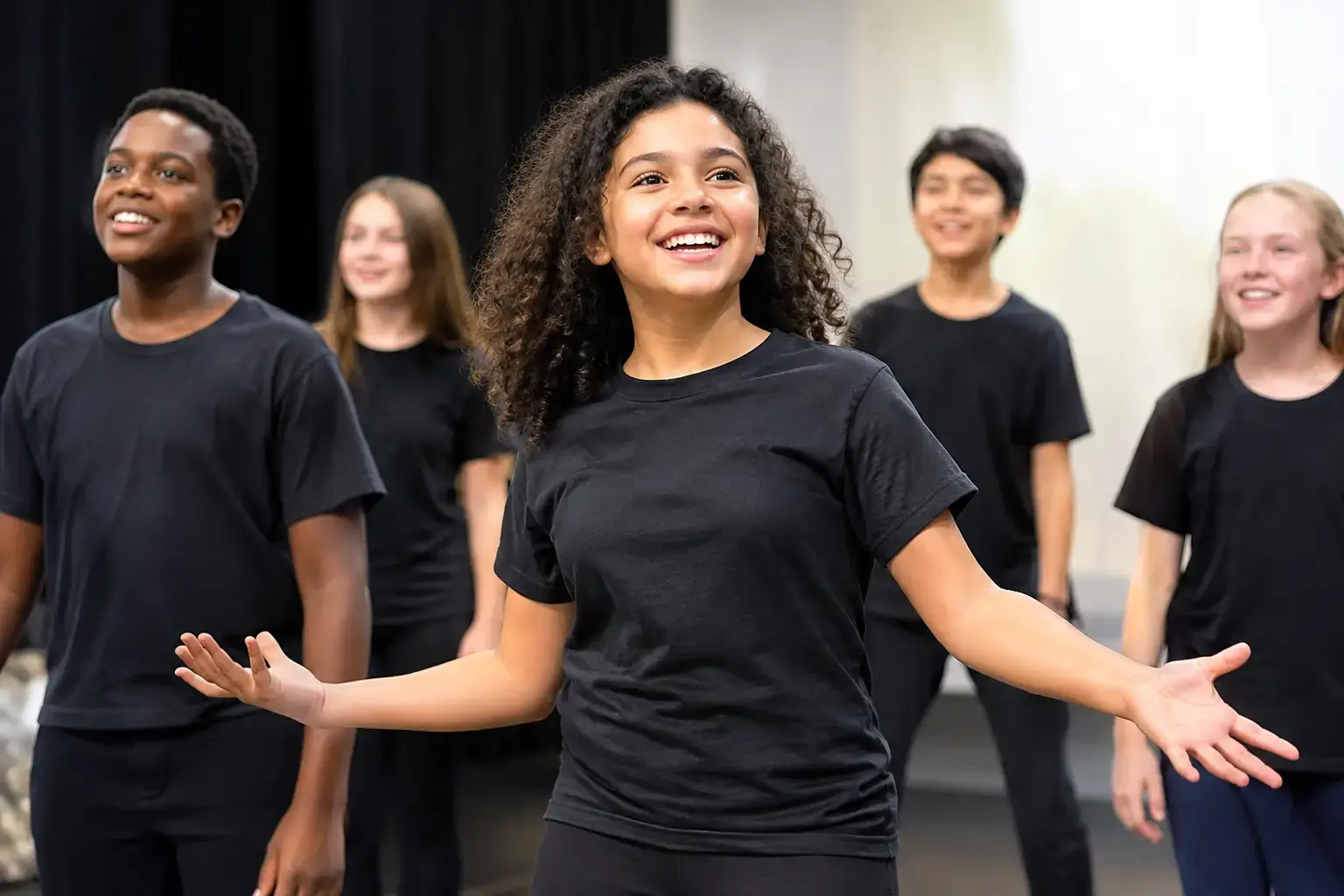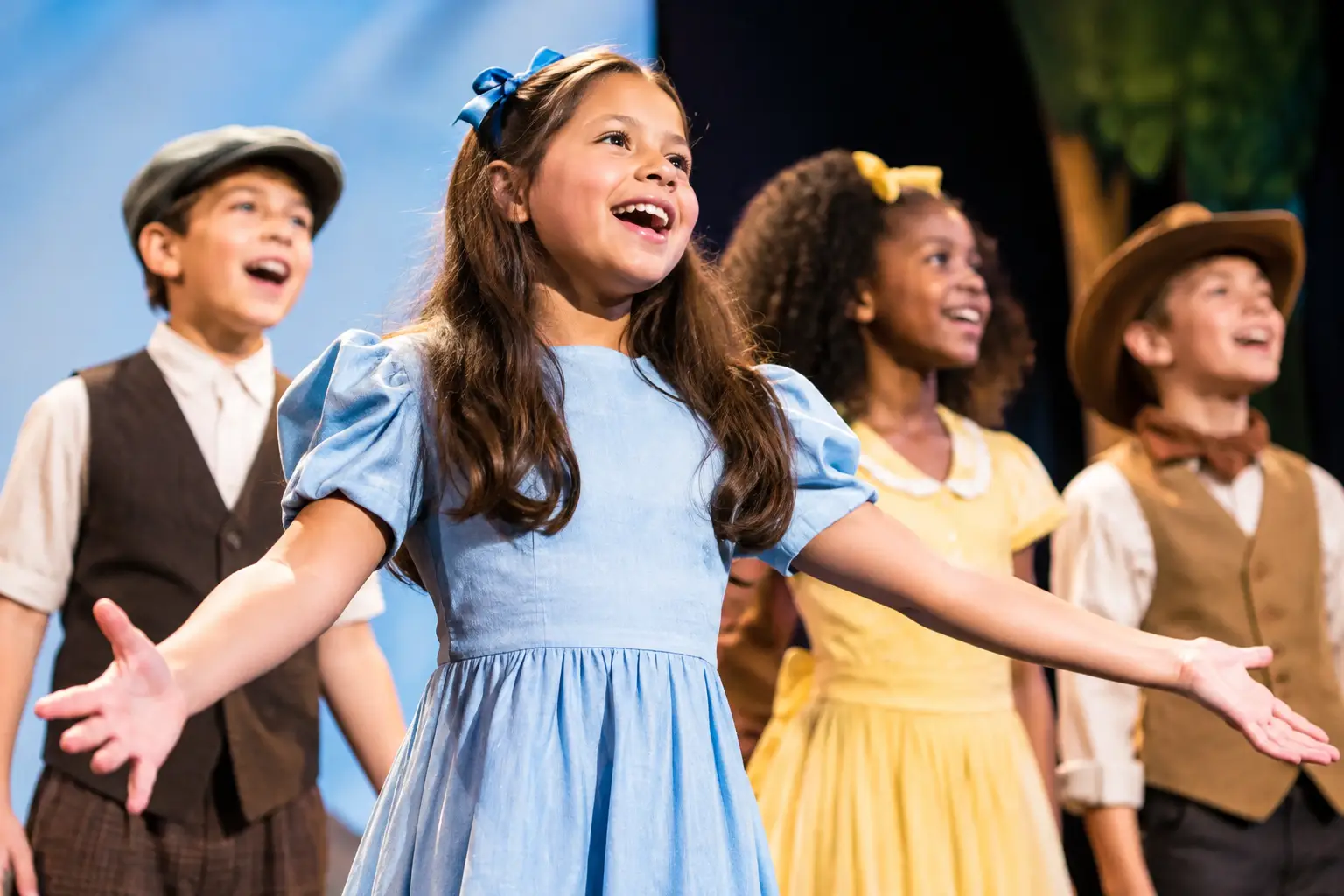
A child delivers a beautiful line in rehearsal, then turns toward the audience on opening night and suddenly seems to whisper it into the floor. This is not a lack of talent or effort. Most young performers simply need clear, encouraging practice learning how their voice can travel through a room without becoming a shout.
To teach stage projection well, start by separating it from the idea of being loud. Projection is about sharing a voice, thought, and character with the person in the very last row. It is a skill that grows through breath, posture, focus, and repetition. When it is taught with playfulness instead of pressure, children and teens can build a powerful stage voice while still sounding like themselves.
What stage projection really means
Stage projection is the ability to send a clear voice into the performance space so an audience can hear and understand the story. A projected voice is supported, purposeful, and directed outward. It is not a strained yell.
For young performers, that distinction matters. A child who is told only to “speak up” may tighten their throat, rush their words, or feel embarrassed. A more helpful direction is, “Let your words reach the back wall,” or, “Share that thought with the families in the last row.” These prompts give performers a goal they can picture.
Projection also includes more than volume. An actor needs to face into the room, shape consonants clearly, take enough breath before a longer sentence, and stay connected to the reason their character is speaking. When the thought is clear, the voice often becomes clearer too.
Build confidence before you correct volume
Children are much more likely to take vocal risks when they feel safe being seen and heard. Before asking a performer to project, recognize what is already working. You might say, “I could really hear the excitement in that line,” then add, “Now let’s send that same excitement to the back row.” This keeps feedback specific and encouraging.
Avoid treating a quiet voice as a personality flaw. Some children are naturally soft-spoken, shy in a new group, or still growing comfortable with a character. Others may project easily in a small rehearsal room but need more practice in a larger theater. Every performer begins in a different place, and that is okay.
At New Star Children’s Theatre, the goal is not to make every child sound the same. It is to help each performer find a voice that feels confident, healthy, and strong enough to support the story. A meaningful role gives young actors a real reason to practice this skill, one line at a time.
Start with breath and body
A supported voice starts before the first word. Children do not need a complicated lesson in vocal anatomy, but they do benefit from noticing how their bodies feel when they are ready to speak.
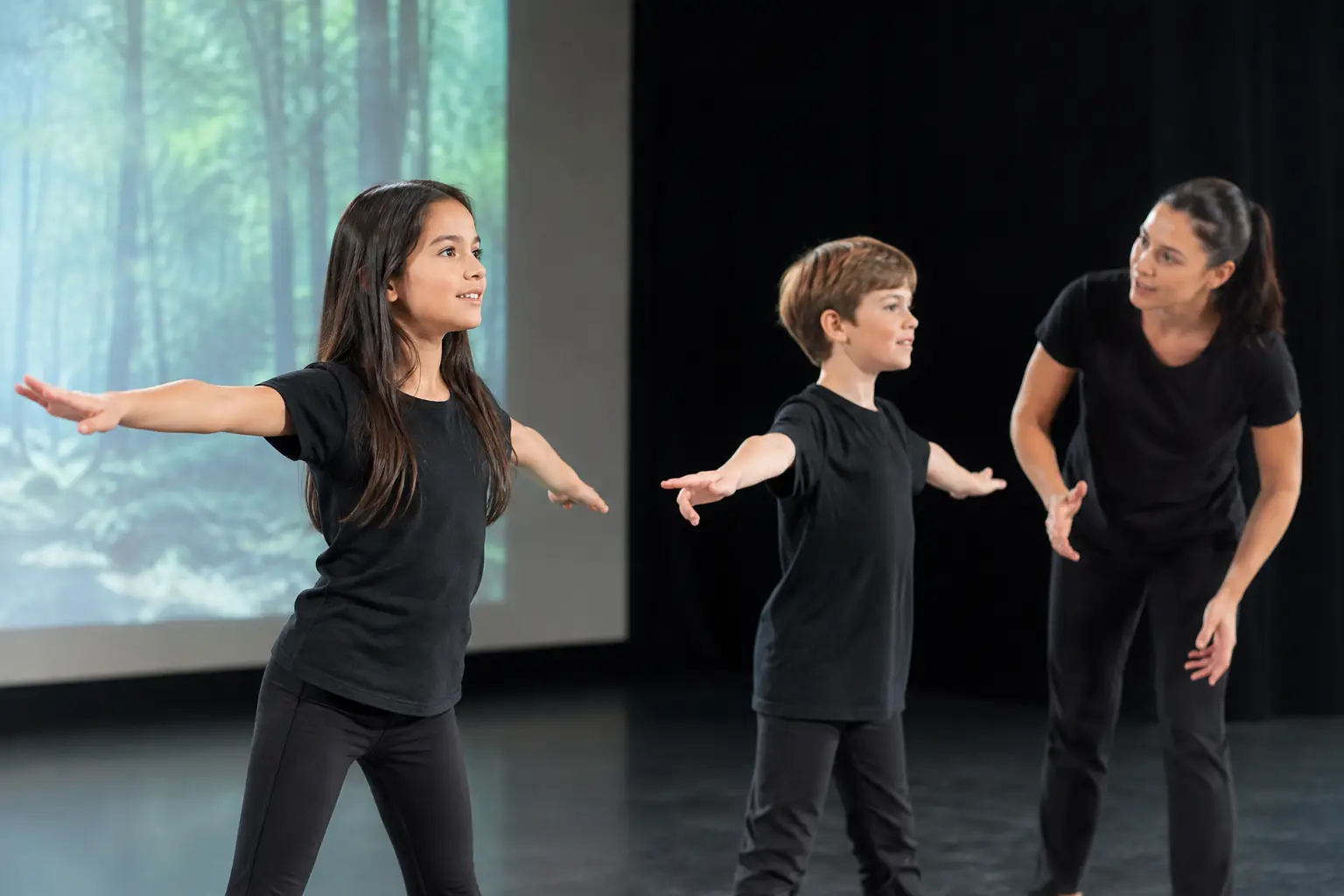
Ask performers to stand with both feet planted comfortably under their hips, knees relaxed, shoulders easy, and heads balanced rather than tipped down. Then have them place a hand gently on their belly and take a quiet breath in. As they breathe out on a long “sss” sound, they can feel the air leaving steadily.
The purpose is not to make breathing feel serious or technical. It is to show young actors that a long line needs enough air behind it. If a child runs out of breath halfway through a sentence, encourage them to find a natural place for a small breath rather than pushing harder at the end.
Good posture can help immediately, especially for performers who fold inward when they feel nervous. A simple reminder such as “Show us your superhero stance” can create an open, grounded position without making anyone feel criticized.
Use images children can play
The best projection exercises feel like theatre games, not drills. Imagination gives young performers a way to practice a big voice without feeling like they are being put on the spot.
Try these activities during warm-ups or short rehearsal breaks:
- Send it to the wall: Have one performer say a simple phrase to an imaginary friend standing at the far wall. Ask the group whether the message arrived clearly.
- Call across the playground: Actors imagine they are calling a friend from one end of a playground to the other. The goal is an energized, clear call, not a scream.
- Secret, normal, stage voice: Let performers say the same line in three ways: a close-up secret, a conversation with a friend, and a voice for an audience. They learn that stage voice has more energy and clarity than everyday conversation.
- Consonant relay: Use a short, silly phrase filled with crisp sounds, such as “Peter packed purple popcorn.” Encourage actors to make the beginning and ending of each word easy to hear.
Keep the focus on exploration. Let children laugh at the silly phrases, try again, and notice the difference for themselves. For teens, you can connect the same exercises to character choices: Is this character trying to persuade someone, celebrate, warn a friend, or hide a worry? A clear intention naturally gives the line direction.
Teach performers where to send the line
Young actors often look at the person they are speaking to, which is usually correct, but they may turn so far upstage that the audience loses the sound. This is where staging and projection work together.
Introduce the idea of an open angle. When two actors talk, they can keep their bodies slightly open toward the audience while still giving each other honest eye contact. They do not need to stare directly at the crowd. Instead, they can let their face and chest remain available to the room.
For a solo line, give the performer a destination. Ask them to choose a friendly face in the back half of the theater, or imagine placing their words on the wall above the audience. A physical destination can stop a child from aiming their voice at the floor.
Practice this in the actual performance space whenever possible. A voice that fills a classroom may not carry in a theater with high ceilings, curtains, lights, and a larger audience. A quick sound check from several seats can help performers hear what adjustment feels right.
Make diction part of storytelling
Parents sometimes worry that diction exercises will make a child sound overly formal. In reality, clear speech gives young actors freedom. If the audience can understand every word, the performer does not have to choose between natural acting and audible acting.
Work on final consonants, especially at the ends of words such as “want,” “help,” and “best.” Young performers often drop these sounds when they are excited or moving quickly. Rather than stopping a scene every time, choose one or two key lines to polish. Ask the actor to slow down slightly, think the thought, and let the important words land.
Tongue twisters can be useful, but scenes are the real test. Have performers speak their lines clearly while crossing the stage, picking up a prop, reacting to a partner, or singing through choreography. Projection is not a warm-up skill that disappears once the show begins. It needs to travel with the actor through the entire performance.
Know when less volume is the better choice
Not every moment should be played at maximum volume. A quiet, intimate line can be deeply moving when it is still supported and clearly directed. The audience should lean in because the character has chosen a softer moment, not because they cannot hear.
This is especially true in emotional scenes. Help performers distinguish between a gentle voice and an unsupported one. They can use breath, clear consonants, and an open body to make a softer choice audible. If microphones are part of the production, remind them that a microphone amplifies sound but does not replace clear speaking or focused acting.
Watch for signs of vocal strain. Hoarseness, throat pain, or a performer who looks tense while speaking are signals to pause and reset. Encourage water, healthy vocal rest, and supported sound rather than pushing louder. Young voices are still developing and deserve thoughtful care.
Give feedback that a child can use right away
The most helpful projection notes are brief, concrete, and connected to a moment in the scene. “I lost the last few words when you turned away” is more useful than “Project more.” Follow it with an action: “Try keeping your shoulder open to the audience and send the last word to the back row.”
Invite the ensemble to become supportive listeners, too. After a scene, ask, “Which words came through clearly?” or “Where did we need more of the story?” This teaches young performers that projection is not about being the biggest voice in the room. It is about helping the whole cast tell the story together.
Celebrate progress often. The child who once spoke only to their scene partner may be ready to share one sentence with the room. The teen who already has a strong voice may be learning to add nuance instead of volume. Both kinds of growth deserve applause.
A projected voice is a gift to an audience, but it can become an even bigger gift to the performer. Each time a young actor stands taller, takes a breath, and lets their words reach beyond their own nerves, they discover that their voice has a place in the story. Keep giving them a welcoming room, a real reason to speak, and the chance to be heard.